with the bold text in the example below: The Skychi Travel Guide : New Orleans
Showing posts with label New Orleans. Show all posts

Friday, February 7, 2014

Buffalo Soliders Black History at Audubon Park


Audubon Park
Audubon Park

"The 39th Congress Section 1, Chapter 299, passed Section 3 of the Army Organization Act of 1866 authorizing  Six Regiments of Negro Troops, Two Cavalry and four infantry.  On Sept. 21, 1866 The Ninth Calvary was activated near the site of Greenville, Louisiana which is now Audubon Park.


Buffalo Soldiers Plaque

The Ninth Cavalry was ordered to Texas in June 1867 to protect the mail and the stage coach routes between San Antonio and El Paso and to defeat raiding Indians in the region. They maintained law and order, built forts, escorted wagons trains, and engaged in battles against Chief Vlctorlo, Chief Geronimo and Chief Nana,


SkychiTravels in front of a fountain at Audubon Park


The name "Buffalo Soldier" was given  to them by the Plains Indians. They gained respect from the Indians because their fighting spirit, stamina, courage and the similarity of their hair to the buffalo.


Children playing at the fountain
These soldiers fought in Cuba and participated in the famous Charge of San Juan Hill. The Buffalo Soldiers received 18 Medals of Honor. In 1944 the Cavalry disbanded and the regiments formed the 4th Cavalry. The Buffalo Soldiers made military history with their courage, pride and performance."


Fountain at entrance of Audubon Park


Did you know that the Buffalo Soldiers Regimen was formed in New Orleans at Audubon Park?


PhotoEssay: For The Birds! Audubon Park


Bird Island Audubon Park

Bird Island New Orleans Audubon Park


LaFreniere Park- Beauty of French Aristocracy


LaFreniere Park
LaFreniere Park


New Orleans is the only city in the United States with its own culture, food, architecture, music, and customs.

The beautiful parks of New Orleans find their legacy in the French Monarchy appreciation for the palaces with expansive gorgeous gardens such as the Palais de Versialles. The French Aristocracy played games in gardens surrounded by flowers, birds and animals.


La Freniere Park is a magnificent park located in Metairie Park in Jefferson Parish. The 155 acre park features a lagoon with various species of ducks, geese, swans, rabbits, roosters and beavers.

You escape the crowds of the French Quarter to appreciate the nature of French Aristocracy at La Freniere Park.

MSY Louis Armstrong New Orleans International Airport


Louis Armstrong Statue New Orleans International Airport


"Biography of Louis Daniel Armstrong

Louis Armstrong was born in New Orleans in the Storyville District known as "the Battlefield" on August 4, 1901. He left school at the 5th grade to help support his family. He sang on street corners, sold newspapers and delivered coal.

He went to the Colored Waif's Home for shooting a gun to celebrate New Year's Eve on December 31, 1912. He learned to play the bugle cornet and to read music from Peter Davis at the Waif's Home. After 18 months, he left the Waif's Home determined to become a musician.

Armstrong first married Daisy Parker as his career as a musician developed.

King Oliver succeeded in encouraging Armstrong to move to Chicago to join his band. While in Chicago, Armstrong married Lil Hardin on February 4, 1924. Lil was a graduate of Fisk University and an excellent pianist who could read, write and arrange music. She encouraged and enhanced Armstrong's career. Some of the Jazz icon's most important and successful work was accomplished with his Hot Fives and Hot Sevens Bands. They separated in 1931 and later divorced in 1938. Louis married Alpha Smith in 1938 after his divorce from Lil.

During that time, Armstrong became very popular and one of the genre's most sought after trumpeters. He traveled a great deal and spent considerable time in Chicago and New York. He first moved to the Big Apple in 1924 to join Fletcher Henderson's Orchestra. Armstrong stayed in New York for a while but moved back to Chicago in October of 1925. He later went back to New York in 1929.

While maintaining a vigorous work schedule, as well as living and travelling back and forth to Chicago and California, Armstrong moved back to New York in the late 1930s and later married Lucille Wilson in 1942. He remained there until his death on July 6, 1971. He left his entire estate to Lucille, his beloved wife.

Louis Armstrong was the most important creative force in the early development and perpetuation of America's music, Jazz. His influence, as an artist and cultural icon, is universal, unmatched, and very much alive today.

According to the website for the Louis Armstrong House Museum: "Louis Armstrong's achievements are remarkable." During his career, he:

Developed a way of playing jazz, as an instrumentalist and a vocalist, which has had an impact on all musicians to follow.

Recorded hit songs for five decades, and his music is still heard today on television and radio and in films.

Wrote two autobiographies, more than ten magazine articles, hundreds of pages of memoirs, and thousands of letters.

Was the only Black Jazz musician to publicly speak out against school segregation in 1957.

So popular that warring sides in the Democratic Republic of the Congo in Central Africa temporarily stopped fighting in 1960 to attend an Armstrong concert.

Appeared in more than thirty films (over twenty were full-length features) as a gifted actor with superb comic timing and an unabashed joy of life.

Composed dozens of songs that have become jazz standards.

Performed an average of 300 concerts each year, with his frequent tours to all parts of the world earning him the nickname "Ambassador Satch," and became one of the first great celebrities of the twentieth century.
Through the years, Louis entertained millions, from heads of state and royalty to the kids on his stoop in Corona. Despite his fame, he remained a humble man and lived a simple life in a working-class neighborhood. To this day, everyone loves Louis Armstrong—just the mention of his name makes people smile."

Special thanks to Michael Cogswell, Ricky Riccardi and Louis Armstrong House Museum for their invaluable help and resources."

For more information on Louis Armstrong:

Louis Armstrong House Museum

34-56 107 Street

Corona, Queens, NY 11368

718-478-8274

Fax: 718-478-8299

www.louisarmstronghouse.org

KEEP JAZZ ALIVE!

Thursday, February 6, 2014

New Orelans African American History Museum & Treme Walking Tour

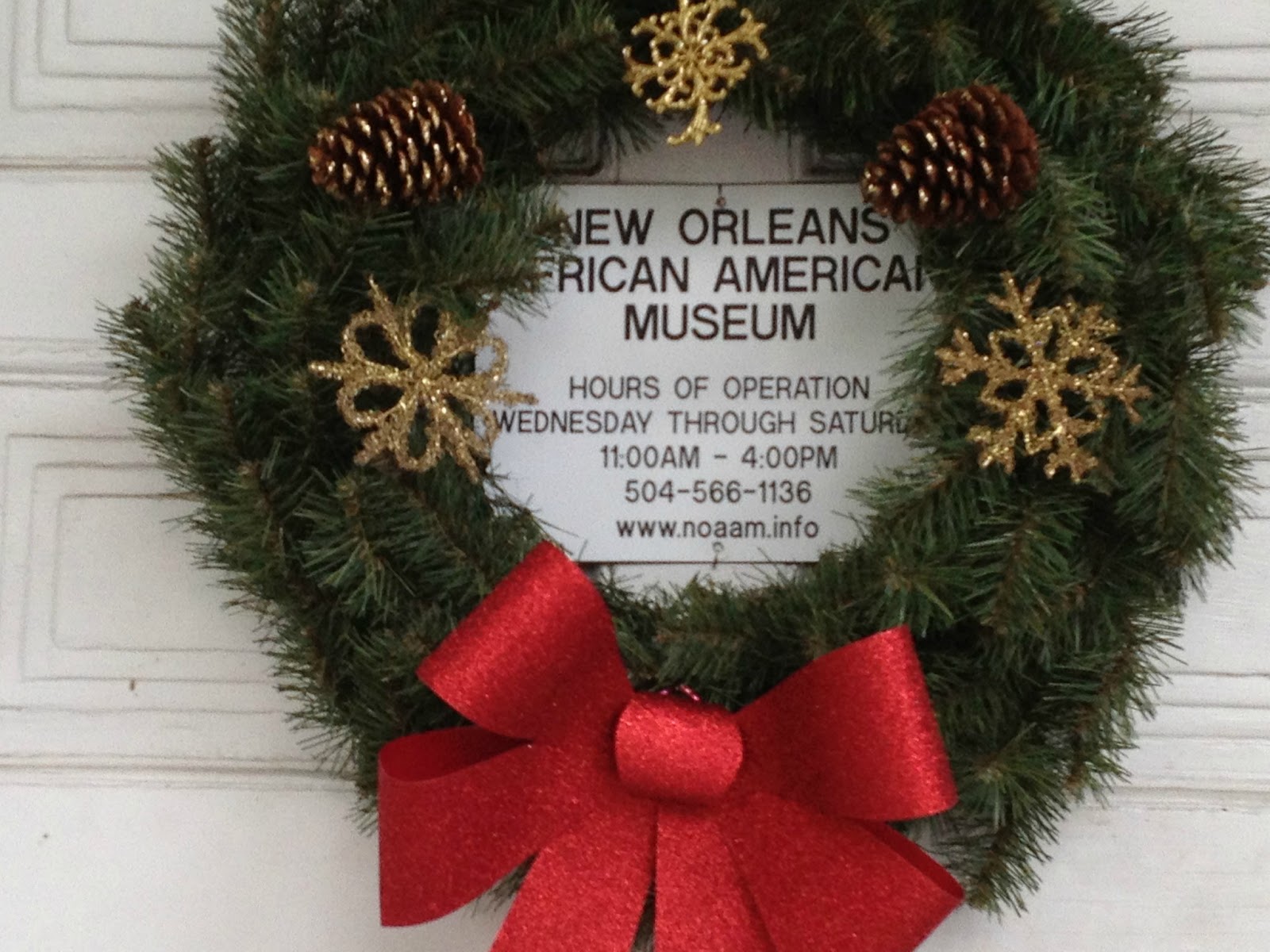
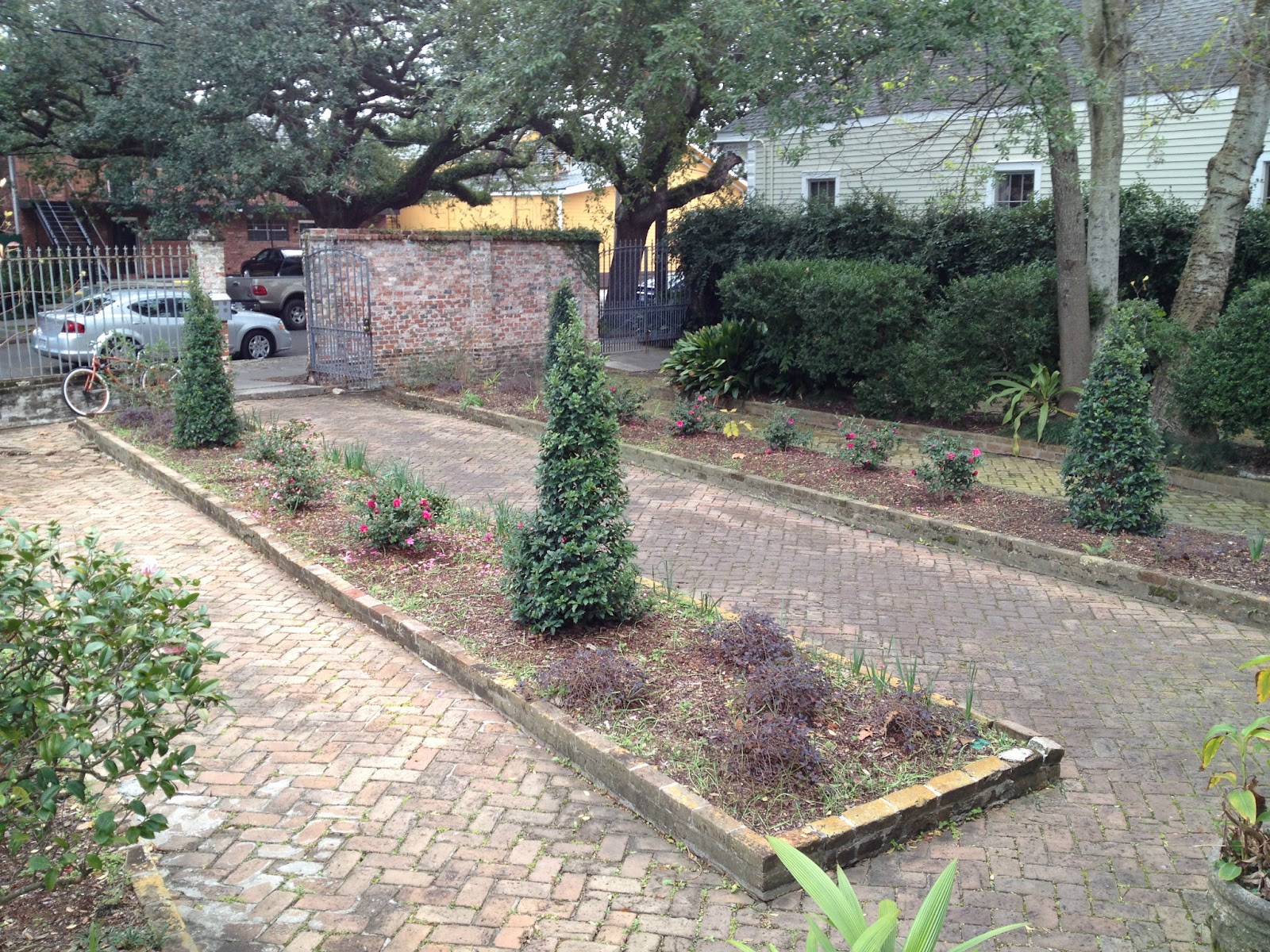
New Orleans African American Museum

The site was once part of the plantation of Claude Treme where the first brickyard in New Orleans had been established in 1725 by the company of the Indies.

The site was once part of the plantation of Claude Treme where the first brickyard in New Orleans had been established in 1725 by the company of the Indies.

Meilleur-Goldthwaite House
Ercted 1826-1829
Residence of WM. F. Goldthwaite, Antiquarian 1859-1889

Interior of New Orleans African American Museum

The mission of the New Orleans African American Museum is to preserve, interpret and promote the African American cultural heritage of  New Orleans, with a particular emphasis on the Tremé community.

The site was once part of the plantation of Claude Treme where the first brickyard in New Orleans had been established in 1725 by the company of the Indies.

The site was once part of the plantation of Claude Treme where the first brickyard in New Orleans had been established in 1725 by the company of the Indies.

Meilleur-Goldthwaite House
Ercted 1826-1829
Residence of WM. F. Goldthwaite, Antiquarian 1859-1889

Treme Viall Meilleur New Orleans African American Museum of Art Culture and History

Meilleur-Goldthwaite House
Ercted 1826-1829
Residence of WM. F. Goldthwaite, Antiquarian 1859-1889

Meilleur-Goldthwaite House
Ercted 1826-1829
Residence of WM. F. Goldthwaite, Antiquarian 1859-1889

Milton Guide of Treme Walking Tour
Milton Guide of Treme Walking Tour 

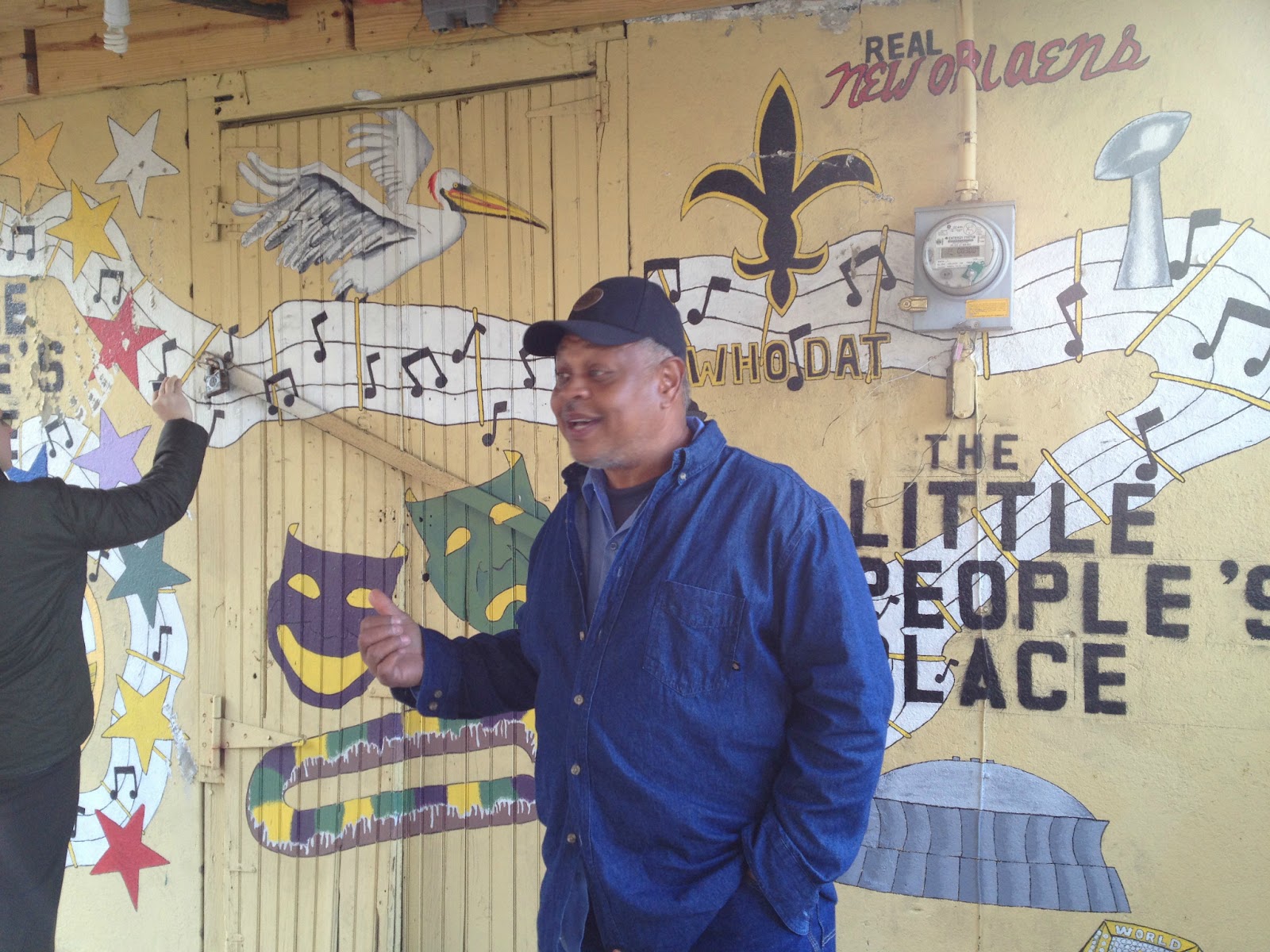
Mr. Robinson former proprietor of  the Historiuc Little Peoples Place

Milton Tour Guide at New Orleans African American Museum

Little People's Place in Treme

Treme Walking Tour Guide sharing history of area

Memorial  of the Unknown Slave at Saint Augustine Church New Orleans
Memorial  of the Unknown Slave at Saint Augustine Church

Movie Set of  HBO TV Series Treme
Movie Set of  HBO TV Series Treme

Creole Townhouse Built Circa 1850
Creole Townhouse Built Circa 1850 Listed on Register of National Historic Places


View of  Slave Quarters
View of  Slave Quarters


Faubourg Treme was founded in 1810 as a prosperous community of free people of color.
Treme is the oldest Black neighborhood in the United States. Treme is also known for the birth of jazz and brass bands. The pioneers of jazz Louis Armstrong and Sidney Bechet created jazz solo traditions. Some more modern New Orleans jazz musicians from Treme are the Marsalis family of  Wynton, Branford, and Delfeayo; Harry Connick Jr., Trombone Shorty and The Soul Rebels.


Trombone Shorty Treme Scenes from TREME HBO TV Series


NOAAM - New Orleans African American History Museum

1418 Governor Nichols Street

New Orleans, LA 70116

504-566-1136


Tip: Call the NOAAM before you visit to verify the times of the guided tour and Treme Walking Tour


Have you ever heard Trombone Shorty cry out "NOLA" "TREME" "WHO DAT?" before his playing his concert?

Sunday, December 30, 2012

Miraculous Healing St. Roch Chapel Cemetery New Orleans

St. Roch Cemetery

Photo of Saint Roch and his dog on the altar at St. Roch Chapel Cemetery, St. Roch is the saint of dogs and dog lovers. St. Roch was born in Montpellier, France with a red cross on his chest. He became an orphan at  20 years old and inherited the governorship which he turned over to his uncle. He gave away his fortune to the money and went a pilgrimage to Rome. During his journey he healed people in a town afflicted with the plague. He later fell ill and went into the forest to die. A dog discovered him and licked his wounds and brought him bread everyday. His health was restored and he went home to France where no one recognized him. They declared him a spy and put him in prison where he and his dog cared for other prisoners until his death. After his death, the people discovered the red cross on his chest and his true identity.

St. Roch Cemetery

St. Roch Chapel Cemetery erected by Father Peter Leonard Thevis, pastor of Holy Trinity Catholic Church. The congregation prayed to St. Roch during the New Orleans yellow fever epidemic in 1868. All of the church members survived the epidemic after petitioning St. Roch. Father Peter Leonard Thevis built the chapel and cemetery in honor of St. Roch.

St. Roch Cemetery
Thank You Room for Miraculous Cures

St. Roch Cemetery
In a small room next to the altar are a collection of unusual items left by grateful healed petitioners.

St. Roch Cemetery
A wooden hand left as a thank you for a miracle cure.

St. Roch Cemetery
A wall filled with crutches and shoes from followers of St. Roch.

St. Roch Cemetery
Prosthetics left by people healed from praying to St. Roch.

St. Roch Cemetery
Thank you note written to St. Roch.

St. Roch Cemetery
Prosthetic leg in the corner of the room

St. Roch Cemetery
St. Rock Thanks

St. Roch Cemetery
Thank You Stones on floor

St. Roch Cemetery
View of St. Roch Cemetery and Chapel

St. Roch Cemetery
Thomas, my Taxi Tour Guide Driver took me to the cemetery to see the little girl who turned to stone.

St. Roch Cemetery
St Roch Campo Santo (resting place of the dead)

St. Roch Cemetery
SkychiTravels visiting St. Roch Chapel and Cemetery

Photo taken by Thomas my Taxi Driver Tour Guide

St. Roch Cemetery
St. Roch Cemetery

Hours: Monday - Sunday 8:30 am - 4 pm

St. Roch Cemetery
St. Roch Cemetery
1725 St. Roch Avenue
New Orleans, LA 70130


Related Articles:


Saturday, May 19, 2012

Video of the Day: New Orleans Parade B Wright Charter School


New Orleans is known as the "Big Easy". The people are carefree and easy going. The are happy people who live to play music and dance. Music and parades are everywhere in the French Quarter.

We were walking in the French Quarter and heard the music from the parade. I don't the reason for the parade or if you need a reason to have a parade in New Orleans. I had to capture of the moment. Here is a video of B. Wright Charter School Band marching in the French Quarter.

What are your impressions of the "Big Easy"?